Chapter VI · Decay Trees
Nothing lasts. Almost everything you will meet in this chapter is already in the act of falling apart.
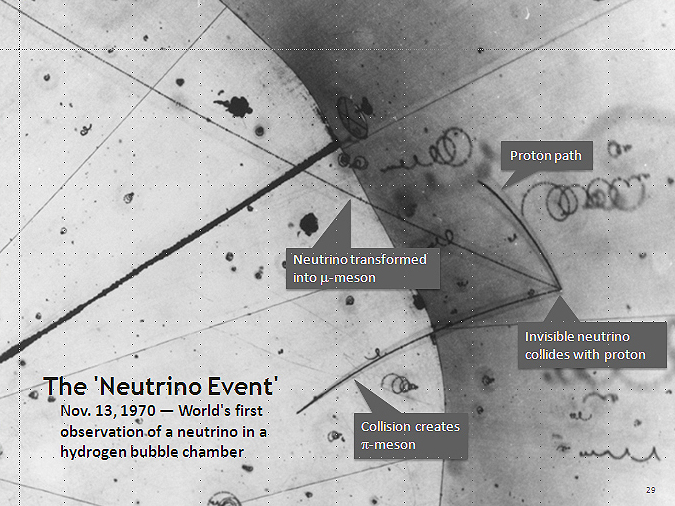
Here is a fact that took physics a century to swallow: a particle does not wear out. A muon that has existed for a microsecond is in exactly the same condition as one just born. It is not aging. It is not tiring. And yet at some unpredictable instant it simply decays — it vanishes, and lighter particles appear in its place.
You cannot ask when. A single particle gives you no warning. All nature will tell you is the mean lifetime — the average over a great many identical copies. Some die early, some late; the average is a fixed property of the species, as solid as its mass.
You cannot ask how, either — only the odds. Every particle has a menu of ways to fall apart, each with a fixed branching ratio: the fraction of decays that take that path. A kaon goes one way 64% of the time, another way 21%, and so on. The menu is fixed. The dice are not.
The cascade
Now the twist that makes it beautiful. The lighter particles that appear are often themselves unstable. So one decay sets off the next, and the next — a cascade tumbling downhill, each step shedding mass, until it reaches particles that have nowhere lighter to go.
Those survivors are a startlingly short list. A proton. An electron. The three flavours of neutrino. The photon. That is all. Every unstable thing in the universe, no matter how exotic, eventually drains into this same tiny set of stable leaves — which is exactly why the ordinary world is built from just protons and electrons. They are simply what is left standing.
Enough words — make one die. Pick an unstable particle below and press Decay. Press it again and again: the same particle takes a different path each time, but every cascade ends in the same handful of stable leaves. Watch the lifetimes shrink as you go down the tree.
Pick a particle above, then press Decay. The same particle dies a different way each time you press it — that randomness is the whole point.
Every leaf is a stable particle — a proton, electron, neutrino, or photon. The cascade can only stop here: nothing lighter is left to decay into.
If each particle decays at a random moment, how can the lifetime be a fixed number?
Because randomness, repeated, becomes a law. Imagine a stadium of 100,000 muons. You can't predict which one dies next — but in any 2.2 microseconds, almost exactly half of those still alive will go. After the next 2.2 µs, half of the survivors again. The individual coin-flip is unpredictable; the fraction is iron-clad. That half-life interval (and the mean lifetime behind it) is what we measure, and it is a sharp, reproducible property of the species.
For the advanced reader → show me the exponential
The number surviving falls as N(t) = N₀ e−t/τ, where τ is the
mean lifetime. The decay rate at any instant is proportional to how many are left — a
constant per-particle probability per unit time, with no memory of how long a particle has already
lived. That “memorylessness” is why a muon never ages: the survival curve looks identical no matter
where you start the clock. The half-life is just t½ = τ · ln 2 ≈ 0.693 τ.
The branching ratios, meanwhile, partition that single rate into competing channels — each path has
its own slice of the total probability, and they must sum to one.
From a cloudy day to a precision instrument
It began by accident, on an afternoon with no sun, and ended as one of the sharpest tools in physics. Here's how we learned to read the falling-apart of matter.
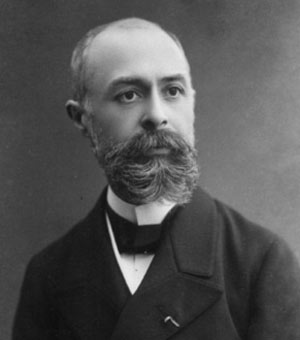

I am among those who think that science has great beauty. Marie Curie
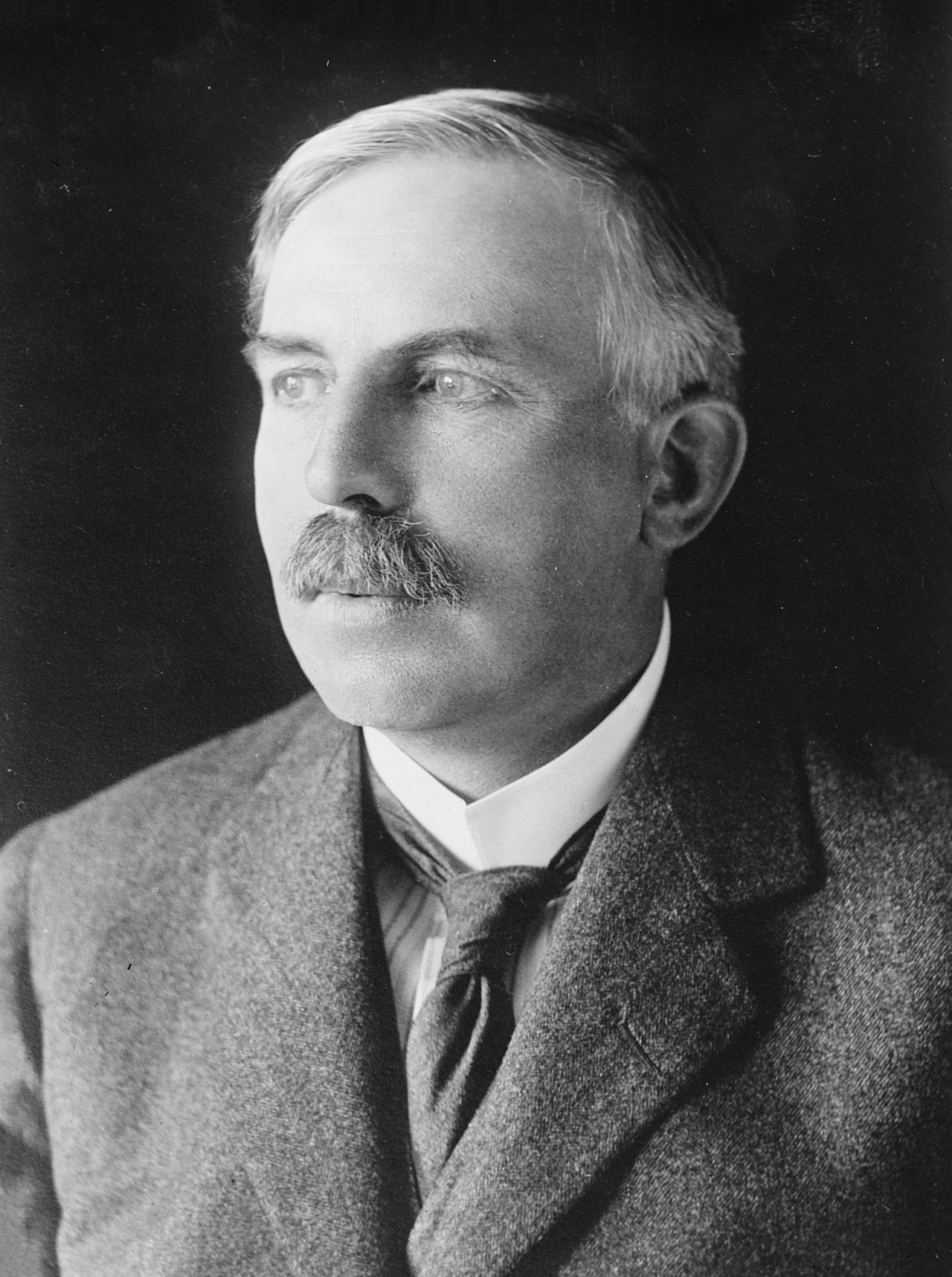
James Chadwick measures the energy of the electrons coming out of beta decay and finds a disaster: instead of one sharp energy, they come out with a continuous spread. If two particles go in and two come out, energy must balance exactly. It did not. Energy appeared to be leaking out of the universe.
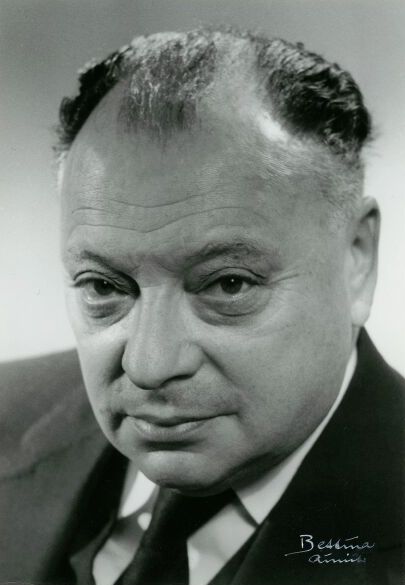
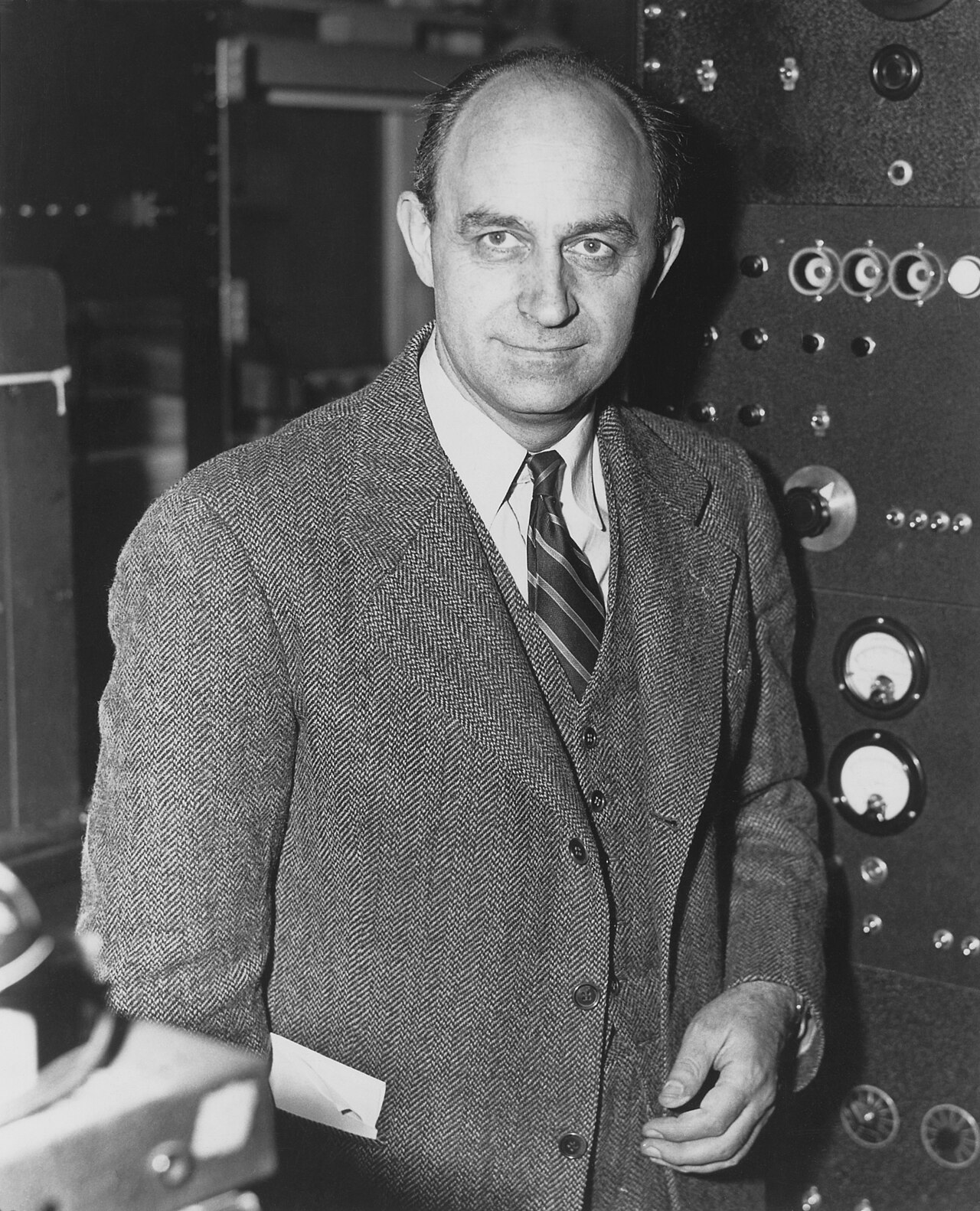
Cowan and Reines finally catch the ghost. Parked beside a nuclear reactor — a flood of antineutrinos pouring out of all that beta decay — their detector registers the unmistakable signature. Pauli's “undetectable” particle was real. He reportedly drank a case of champagne with friends the night he heard.
As the quark model matures, decay stops being a list of recipes and becomes a mechanism: the weak force, mediated by the heavy W and Z bosons, lets one quark flavour turn into another. Beta decay is just a down quark becoming an up quark, emitting a W that becomes an electron and an antineutrino. Every decay in the interactive above runs on this.
Decay is now a precision instrument. The fixed lifetimes and branching ratios are measured to many digits, and any deviation would be a crack in the Standard Model — a door to new physics. The randomness Becquerel stumbled onto on a cloudy afternoon is, a century later, one of our sharpest tools.
So the universe is mostly temporary. Heavy particles flash into being and fall apart in less than a heartbeat — many in less than a trillionth of one — draining downhill until only the few stable things remain. What you are made of is not what nature prefers. It is what survived.
You are what was left standing.
We have watched particles end. To see where they begin — not as little balls, but as ripples in fields that fill all of space — step back to the chapter before this one.