Chapter V · Fields as Particles
There are no particles. There never were. There is only a set of fields, filling all of space — and what you call a particle is a single ripple in one of them.
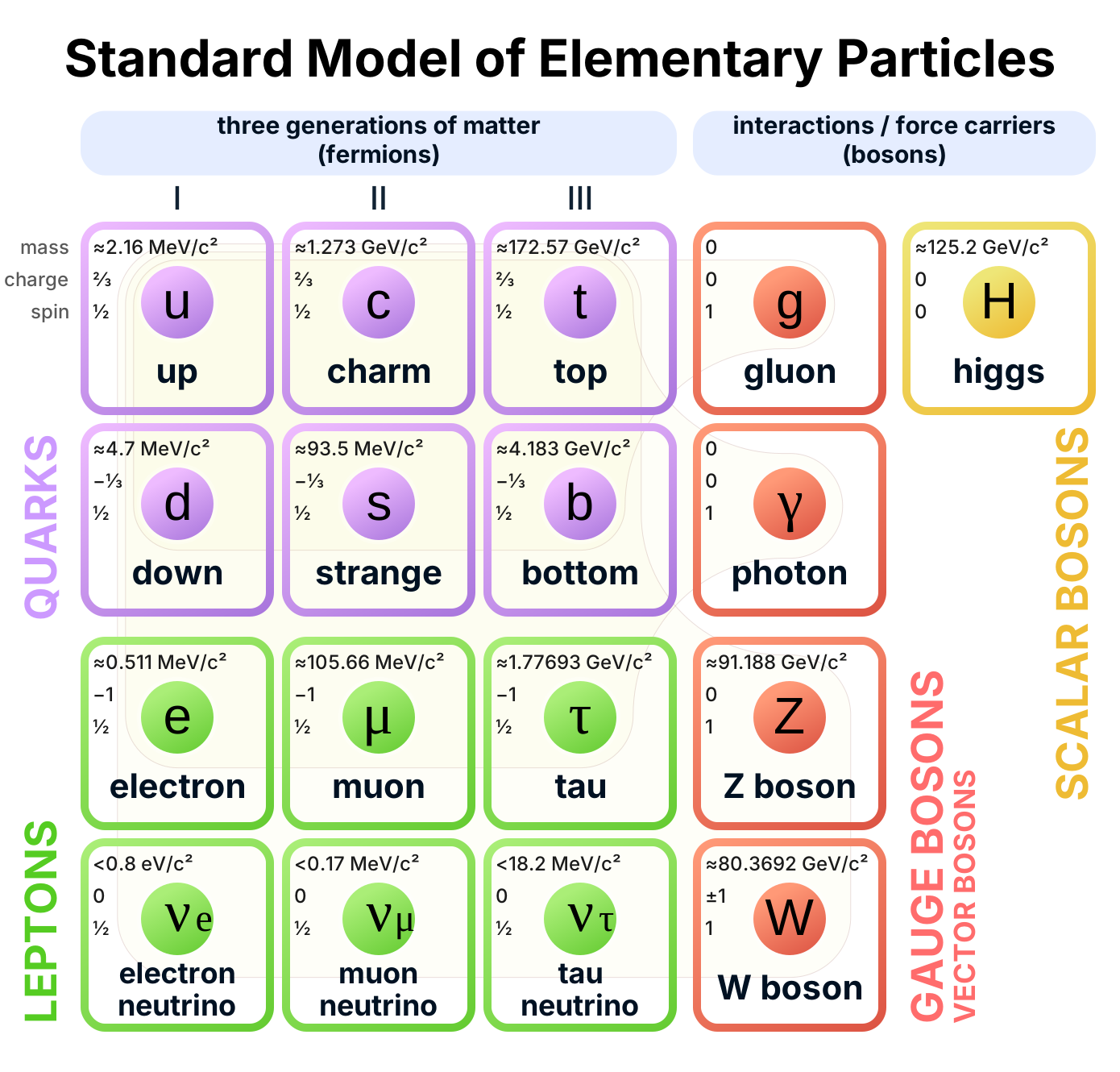
For four chapters we have talked about particles as if they were things — tiny marbles with a mass and a charge, sitting at a point.
Now give that up. The marble was a lie we told to get started.
Here is the real picture. Spread across all of space — through you, through this page, through the empty room and the empty light-years between galaxies — there is an electron field. It is not made of electrons. It is the electron. It is a single thing, everywhere at once, perfectly still when left alone.
Pluck it in one spot and it quivers. That quiver carries a fixed, indivisible packet of energy — you cannot have half a quiver. One quiver is one electron. A second quiver is a second electron, identical to the first, because they are ripples in the same pond.
And there is not one field but seventeen — one for every particle in Chapter I. The photon is a ripple in the electromagnetic field. The Higgs is a ripple in the Higgs field. Every particle you have met is a quantized shiver of something that was already there.
Three fields you already know
A ripple in the electron field. Every electron, anywhere, is the same ripple in the same field — that's why they're identical.
A ripple in the electromagnetic field. Light is that field shivering as it travels.
A ripple in the up-quark field — one of the fields woven through every proton in your body.
So what does a ripple actually look like — and how does a wave that fills all space become one compact particle? Here. Make one.
Below is one field, drawn as a line. Tap a mode to make it ring like a guitar string — a standing wave that breathes in place but goes nowhere. Then drag Localize all the way right: the single wave is replaced by a band of waves added together, and they pile up into one travelling lump. That lump is the particle.
Motion is paused (your system prefers reduced motion). The frame below is a snapshot — drag Localize or pick a mode to redraw it.
Notice you never added a particle — you only changed the shape of the field. The particle was always just a way the field can be.
Why does the energy come in whole packets?
A guitar string can only vibrate at certain pitches — its fundamental and the overtones above it. You can pluck it hard or soft, but the pitches are fixed by the string. A quantum field is like that, but for energy: each mode of the field can only hold energy in whole steps, never a fraction of a step.
One step of energy in the electron field is one electron. Two steps, two electrons. There is no such thing as 1.5 electrons for the same reason there is no note half a semitone wide on a fretted guitar — the field simply doesn't have a setting for it. Quantized just means “comes in whole steps,” and that single rule is what turns a smooth, continuous field into a countable list of identical particles.
For the advanced reader → the field is a tower of harmonic oscillators
Decompose the field into Fourier modes and each mode obeys the equation of a simple harmonic oscillator. Quantize each oscillator and its energy ladder is E = (n + ½)ℏω: the rungs are evenly spaced, and n — the rung you're on — is the number of particles in that mode. Creation and annihilation operators move you up and down the ladder, adding or removing one quantum.
This is why all electrons are identical: they aren't separate objects that happen to match, they are all just “n went up by one” on the very same field. The lump you built with Localize is a wave packet — a superposition of many modes — and the spreading you see in massive mode is dispersion: the relativistic relation ω² = k²c² + (mc²/ℏ)² gives each mode a different speed, so a massive packet smears while a massless one (m = 0, ω = kc) holds its shape.
From lines of force to fields
It took 140 years to go from “the space around a magnet feels strange” to “everything is a field.” Here's the path.
Faraday, who could barely do the maths, insists that the space around a magnet is not empty — it is filled with real lines of force. The field is born as a physical idea.
I cannot conceive curved lines of force without the conditions of a physical existence in that intermediate space. Michael Faraday (1852)
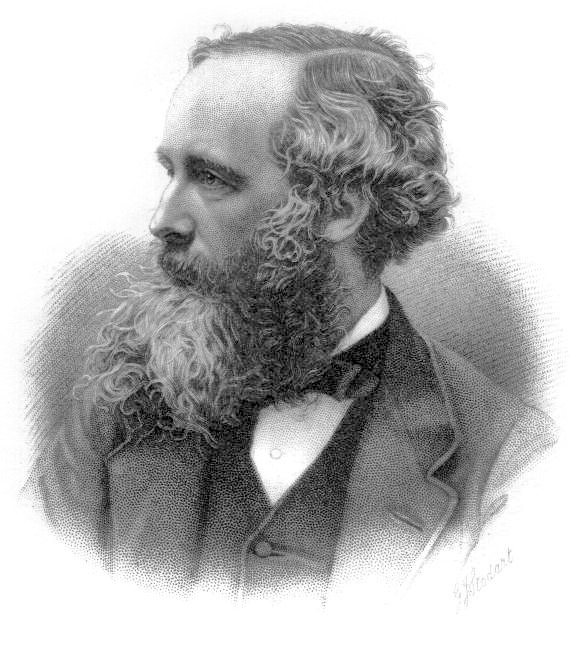
Planck, desperate to fix a broken formula, assumes light's energy comes only in whole chunks. He thinks it's a math trick. It is the first crack of quantization.
Einstein takes the chunks literally: light is packets — photons. A wave that is also a count of particles. Nobody yet sees that this is the whole future.
Born, Heisenberg, and Jordan quantize the electromagnetic field itself in the “three-man paper.” The field, not the particle, becomes the thing you quantize.
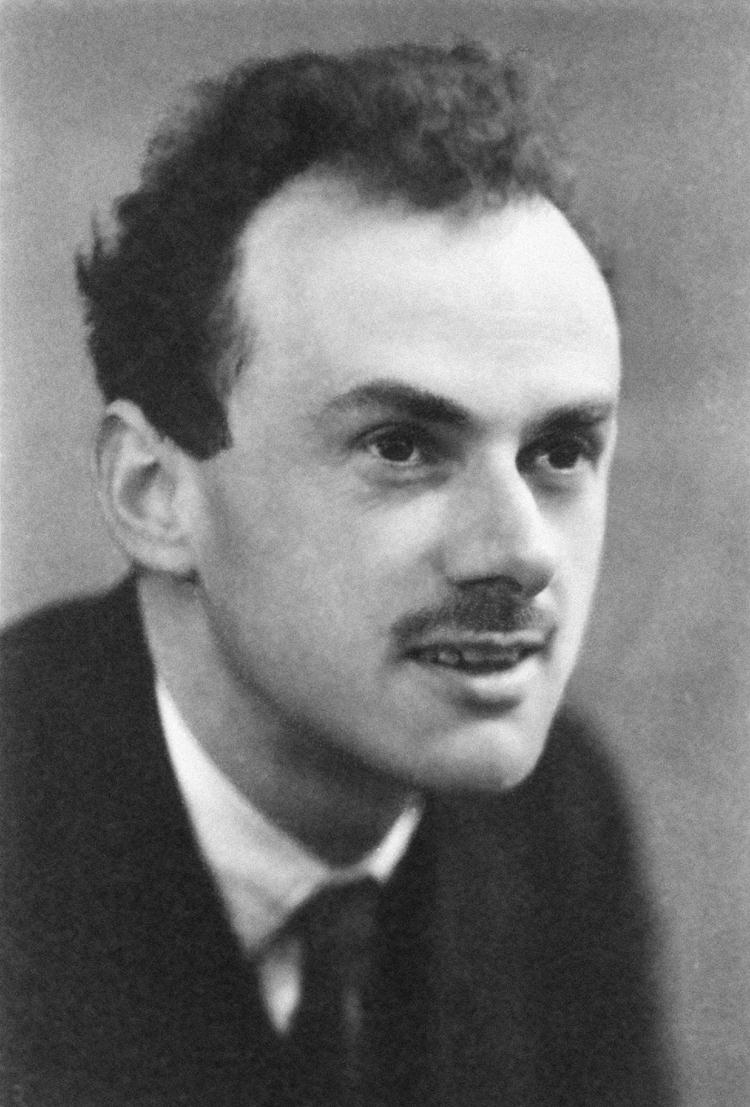
The quantum theory of radiation … gives results in agreement with experiment. P.A.M. Dirac (1927)
Dirac's equation for the electron demands a partner field with opposite charge. The electron, too, is just a ripple — and its field carries antimatter for free.
The Standard Model is complete: every particle in Chapter I is now written as a quantum field. The marble is gone for good — there are only fields, and the ripples we count.
Go back to that chart of seventeen tiles. The fields were there before anyone drew them — silent, flat, filling the room and the space between the stars.
Everything is like that. You are not a collection of tiny balls; you are a standing pattern of ripples in seventeen invisible fields that stretch to the edge of the universe. Nudge one field and a particle appears. Let it settle and the particle is gone — but the field, always, remains.
There are no particles. There are only fields, and the ripples we count.
But these ripples don't last forever — most flicker into existence and immediately fall apart into lighter ones. Follow a single particle as it comes undone. That's where we go next.